
Splendours of North India
Itinerary at a glance
| Day | Accommodation | Destination | Nights | Basis |
|---|---|---|---|---|
| 1 | The Park New Delhi | New Delhi | 2 | B&B |
| 2 | Radisson Hotel Varanasi | Varanasi | 1 | B&B |
| 3 | Radisson Jass Hotel Khajuraho | Khajuraho | 1 | B&B |
| 4 | Hotel Trident Agra | Agra | 1 | B&B |
| 5 | Trident Hotel Jaipur | Jaipur | 2 | B&B |
| 6 | Trident Hotel Udaipur | Udaipur | 2 | B&B |
| 7 | Trident Nariman Point | Mumbai | 1 | B&B |
Quotation Full Itinerary
Day 1 The Park New Delhi, New Delhi
Today is the beginning of your Splendours of North India tour- Superior Accommodation.
You will be met at Delhi airport and thereafter transferred to your hotel for the next two nights. Modern Delhi is a chaotic tapestry of medieval fortifications, Mughal mausoleums, dusty bazaars, colonial-era town planning, and mega malls.
Overnight: The Park New Delhi
The Park New Delhi is situated in the heart of the city center’s business and entertainment hub, Connaught Place. Lined with handpicked contemporary art throughout the public and private spaces, the hotel provides an elevated standard of style, design and decor. State of the art technology and amenities for commerce, leisure and relaxation makes The Park an ideal choice for guests seeking accommodation in Delhi. The luxury rooms and suites are models of personal touch and superior amenities and services. Access to indulgent restaurants, a day gym, spa and salon and spacious banquet rooms offer a gamut of innovative and inspired moments.

Included Luxury room
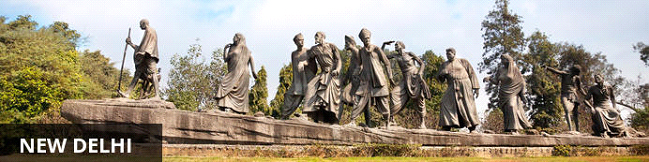
India’s largest city, Delhi, has been one of the country’s commercial and economic hubs for centuries and, as a result, is incredibly rich in culture and history. Made up of the ancient walled city of Old Delhi and the more modern sector, New Delhi, the city encompasses a staggering array of beautiful architecture, notable monuments and age-old temples, including three UNESCO World Heritage Sites – the Red Fort, Qutab Minar and Humayun’s Tomb. Other key attractions include the 17th century Chandni Chowk marketplace – still one of the city’s most popular retail centres today, particularly for jewellery and traditional Indian saris; the iconic Bahà’i Lotus Temple – an award-winning architectural gem; and the Jama Masjid, India’s largest mosque.
Day 2 The Park New Delhi, New Delhi
This morning enjoy breakfast and then depart on a sightseeing tour of Old and New Delhi. You will be returned to your hotel at the tours conclusion
Day 3 Radisson Hotel Varanasi, Varanasi
After breakfast at your hotel you will be picked up and transferred to the airport for your flight to Varanasi. Varanasi the ‘ Eternal City’ is regarded as one of Hinduism’s seven holy cities and is located on the sacred River Ganges. The ghats are constantly lined with locals and those who’ve made the pilgrimage to this holy city.
This afternoon after settling into you’re hotel you will have a chance to visit the ghats for yourself on a tour which will also cover Durga Temple, Kashi Vishwanath Temple and the Gyan Kupor Well.
Overnight: Radisson Hotel Varanasi
The Radisson Hotel Varanasi is a five-star luxury hotel boasting modern architecture and warm hospitality. It is conveniently located in the city centre making it ideal for travellers. The hotel offers spacious accommodations and top-notch services, including an on-site spa, high-speed internet access and multiple dining outlets.

Included Luxury room
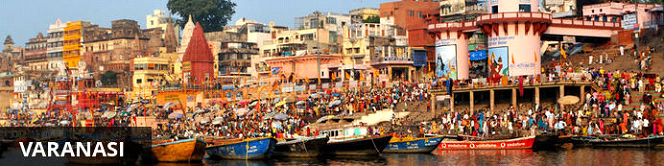
An ancient and deeply sacred city, Varanasi rests along the banks of the holy River Ganges and encompasses a wealth of beautiful riverside temples, stately old forts and vibrant markets. It’s considered the spiritual capital of Hinduism, and it’s widely believed that dying here will bring salvation. As a result, the city is home to a multitude of ghats – stone steps leading to the river –some of which are used for bathing rituals and others as cremation sites. An early morning boat ride along the Ganges offers an excellent way to take in the ghats and the bustling activity centred on them.
Day 4 Radisson Jass Hotel Khajuraho, Khajuraho
This morning you will rise early for a dawn boat ride on the holy River Ganges. You will return to your hotel for breakfast before departing to the airport for your flight to Khajuraho. The city is famous for being the dwelling place of the 10th century Khajuraho temples. After checking in to your hotel the rest of the day is at your leisure.
Overnight: Radisson Jass Hotel Khajuraho
The Radisson Hotel in Khajuraho is located just 4 km from the airport, railway station, market place and world heritage temple complex. The convenient setting of the hotel makes it an ideal destination for tourists. Onsite, the Radisson has 4 well appointed suites and 86 luxury hotel rooms for a Khajuraho vacation. Each room contains a plasma TV, wireless broadband internet access and showcases garden views of the property. The Radisson Hotel has an outdoor pool, a fitness center with a spa and a shopping arcade. Guests can also indulge at the multi cuisine restaurant and full bar or order room service, available 24 hours.

Included Deluxe room
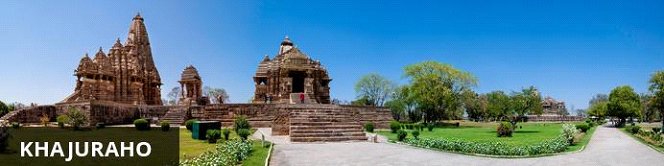
Considered one of India’s seven wonders and listed as a UNESCO world heritage site, Khajuraho encompasses the nation’s largest array of medieval Hindu and Jain temples, decorated with intricately detailed erotic sculptures and reliefs. The site incorporates close to 100 sacred structures, some of them exquisitely preserved, and each evening, a light and sound show is staged here, covering the history, philosophy and craftsmanship encapsulated in this archaeological goldmine.
Day 5 Hotel Trident Agra, Agra
Today you will visit the Khajuraho Eastern and Western Group Temples which are famed for their exquisite erotic sculptures. The temple art is some of the finest in the world.
Mid-afternoon you will be transferred to Jhansi to board the Shatabdi express train to Agra. The train will arrive in the late evening where upon you will be met and transferred to your hotel. Agra is situated on the bank of the Yamuna river and is home to the famous monument the Taj Mahal.
Overnight: Hotel Trident Agra
With the Taj Mahal in close proximity, Hotel Trident Agra is the ideal base from which to experience the city steeped in history. The charming hotel is set amidst beautifully landscaped gardens and water fountains. Built in local red stone, reminiscent of the Mughal era, the hotel features 135 tastefully appointed rooms and suites, which overlook the central courtyard and gardens. The soothing views are complemented by a selection of dining options, recreation and wellness facilities, accompanied by warm hospitality. From a morning yoga session to an indulgent spa therapy or fun activities for the children, a stay at Trident Agra has plenty to offer.

Included Deluxe Garden view room
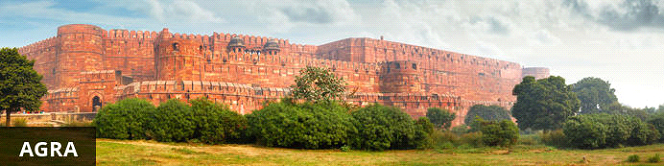
Home of the world-famous Taj Mahal, Agra is one of India’s prime tourist destinations for specifically this reason, though its attractions also extend to an array of other impressive historical sights. These include the red-hued Agra Fort, the sacred Jama Masjid mosque and Itmad-ud-Daulah’s tomb, with its white marble facade embellished with intricate inlaid designs and semi-precious gems. The Taj, however, is in a league of its own and needless to say is a must-see for any visitor to the city. Commissioned by the Mughal emperor Shah Jahan in the 15th century as a memorial to his beloved wife Mumtaz Mahal, it is an architectural masterpiece of exquisite craftsmanship and perfect proportions.
Day 6 Trident Hotel Jaipur, Jaipur
Begin your day with a sunrise visit to the Taj Mahal then after breakfast enjoy a tour of the Agra Fort- a testament to the rise and falls of the Mughal empire built by Emperor Akbar in red sand stone over 400 yrs ago.
This afternoon you will travel to Jaipur, ‘the Pink City’, stopping en-route at Fatehpur Sikri for a tour of the deserted capital of Emperor Akbar. The capital was built in the 16th century and abandoned 12 years later due to a scarcity of water.
This evening is at your leisure in Jaipur.
Overnight: Trident Hotel Jaipur
The Trident Jaipur Hotel holds breathtaking views of the serene Mansagar Lake and the Aravalli range. The hotel has 132 guest rooms, and is situated en route to Jaipur’s well known Amber Fort.

Included Deluxe Garden view room
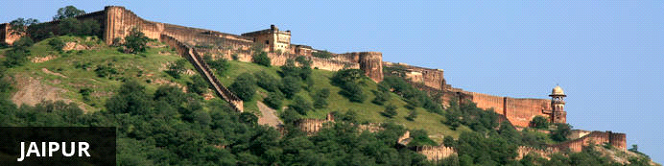
Gateway to the state of Rajasthan, Jaipur offers a heady mix of old and new India. Famously known as the “Pink City”, Jaipur’s nickname was coined in 1876 when a visit by the Prince of Wales prompted the government to paint the Old City terracotta pink, traditionally the colour of hospitality, to welcome the Royal. Jaipur was founded in 1727 by Maharaja Sawai Jai Singh II, a soldier, ruler, and scholar in mathematics and astronomy, after whom the city has been named. Jaipur is home to splendid fortresses, majestic palaces, temples and a must-see medieval observatory.
Activities
Taj Mahal
The iconic Taj Mahal is not only an architectural masterpiece, a UNESCO World Heritage Site and one of the new Seven Wonders of the World – it’s also the enduring legacy of a royal love story. It was commissioned in the 15th century by the Mughal Emperor Shah Jahan after the death of his third and favourite wife, Mumtaz Mahal, to serve as her final resting place and a symbol of his eternal affection for her. Combining Islamic, Persian, Ottoman Turkish and Indian design elements, it’s an awe-inspiring structure of elegant domes and white marble, which changes colour along with the light – pink at sunrise, pearly white in the afternoon and silver-gold in the full moon.

Agra Fort
Known as the Red Fort of Agra, this walled imperial city was founded in 1565 by the Emperor Akbar (1556-1605) and is a well-deserving UNESCO World Heritage site, located just 2.5 kilometres from the famous Taj Mahal. Its palaces, grand mosques and elaborate public hall are crafted from pink-red sandstone and are testament to an era when Indo-Muslim art, strongly marked by influences from Persia, was at its height. Emperor Shah Jahan, who built the Taj Mahal for his deceased wife, was imprisoned by his son Aurangzeb in Agra Fort. He is said to have died in the Musamman Burj, a marble tower he himself built, with one of the most alluring views of the Taj Mahal.

Fatehpur Sikri
A highlight in the province of Uttar Pradesh, Fatehpur Sikri served briefly as the capital of the Mughal Empire from 1571 to 1585. This world heritage site is rated as one of the best preserved collections of Mughal architecture in India. Surrounded by a six kilometre wall, with the fourth being a lake at the time, a day can be spent exploring the elaborate structures within. Marvel at the impressive Jama Masjid mosque, the detailed palaces built for Emperor Akbar’s wives, the public and private discussion halls and vast ornamental pool; all of which took over 15 years to conceptualise and build.

Day 7 Trident Hotel Jaipur, Jaipur
This morning enjoy breakfast at the hotel and then prepare for a sight seeing tour of Jaipur and Amber. Your tour will include visits to:
The Amber Fort was once the ancient capital of Jaipur, it is beautifully situated on a hillside facing a lake. Here you can ride an elephant ( or a jeep if you prefer) to get to the top of the fort.
Hawah Mahal also known as the ‘Palace of winds’, is a stunning structure the facade of which is all pink windows and filigree screens.
City Palace is well known for it’s impressive and extensive collection of art, carpets and old weapons.
Jantar Mantar is renowned for being the largest and best preserved 18th Century Stone Observatory.
Return to your hotel with the evening at your leisure.
Included
Deluxe Garden view room
Activities
Amber Fort
Amber Fort, officially known as the ‘Amer Palace’, is one of the most famous forts of Rajasthan attracting around 4000 to 5000 visitors a day during peak tourist season. The palace was named after the small town of Amer, where it is situated – only eleven kilometres from Jaipur. Perfectly picturesque, this 16th century hillside residence is well preserved, boasting grand pavilions and mirrored halls that open onto flourishing gardens and courtyards. Although the palace’s main construction started in 1592 by Maharaja Man Singh, it was added to over the years by successive rulers and continued to be occupied by them until Jaipur was built.

Hawa Mahal (Palace of Winds)
One of Jaipur’s most recognised buildings, the Hawa Mahal (Palace of Winds) is known for its iconic façade. Small windows, decorated with intricate latticework create a honeycomb-like appearance. The original intention of the lattice was to allow the royal ladies to observe everyday life in the street below without being seen. The cooling effect, provided by the breeze passing through the small windows, gave the palace its name. Built in 1799 by Maharaja Sawai Pratap Singh, the unique construction was originally designed to look like the crown of Krishna. A panoramic view of Jaipur can be had from the top of the building.

Jaipur City Palace
City Palace forms one of the most famous tourist attractions and a major landmark in Jaipur. The beautiful palace was built by Maharaja Sawai Jai Singh during his reign. Among the various forts and palaces of Jaipur, City Palace stands apart, with its outstanding art and architecture.

Jantar Mantar – Jaipur
In 1734, the year of its completion, the Jai Singh Observatory was the last outpost of medieval science. From the outside, the eighteen fixed observational instruments look more like playground apparatus than sighting devices, but they were used to measure the position of the sun, stars and planets. Built by Jai Singh, the first Maharaja of Jaipur who founded the city in 1727, the observatory is one of a handful. Jai Singh, fulfilling a lifelong interest in mathematics and astronomy, built observatories in Delhi, Jaipur, Ujjain, Mathura and Benares. The Jaipur observatory is the largest and best preserved of these.

Day 8 Trident Hotel Udaipur, Udaipur
Following breakfast this morning you will drive to Udaipur, which literally means the’ City of Sunrise’. Udaipur was established by a Rajput King in 1567 and is now commonly referred to as the ‘City of Lakes’ and ‘Venice of the East’.
After checking in the remainder of the day is yours to enjoy as you wish.
Overnight: Trident Hotel Udaipur
Experience the splendour of Rajasthan in Udaipur, nicknamed the ‘City of Lakes’ for its picturesque lakes framed by the Aravalli range. The history of Udaipur is a rich and charming tapestry of lakeside palaces, forts, temples and gardens which reflect the varied influences of centuries past. Built over 43 acres on the banks of Lake Pichola, Trident Udaipur Hotel is perfectly located to explore the famed sites of the city, such as the City Palace, the Crystal Gallery, the Monsoon Palace or the beautiful Jagmandir.
After soaking in the sights of this historic city, return to a private sanctuary at Trident to unwind. Inspired by the architectural and cultural heritage of Udaipur, all the 137 rooms and 4 suites are furnished in hues of muted beige and cream with traditional artefacts, reflecting elegance and charm.
No royal hospitality is quite complete without a lavish feast. The main restaurant, Aravalli, serves authentic dishes from the Kingdom of Mewar, known for its fine cuisine. Enjoy a walk in the sprawling gardens at ‘Bada Mahal’ – a 150 year old wild life conservatory within the hotel premises. It is also recommended to let the concierge arrange a boat ride under the stars on the beautiful lake in the quaint pontoons to surrender to the charms of this magnificent city.

Included
Deluxe Garden view room
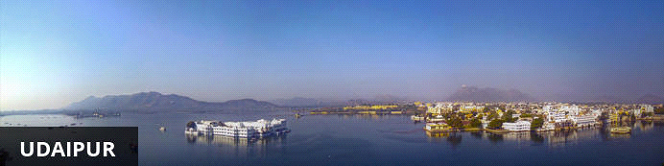
Dubbed the ‘Venice of the East’, the city of Udaipur is built around three interconnected lakes – Lake Pichhola, Fateh Sagar Lake and the smaller Swaroop Sagar Lake – and encircled by the hills of the Aravalli mountain range. It is home to an array of ancient temples and fairy-tale palaces (several of the latter have been converted into luxury heritage hotels) and is known as one of Rajasthan’s most beautiful and romantic cities. Must-see attractions include the City Palace, the Lake Palace (set on a small island in the middle of Lake Pichola) and the Udaipur Solar Observatory – Asia’s premier solar-gazing site.
Day 9 Trident Hotel Udaipur, Udaipur
This morning you will depart on a city tour which will include visits to:
City Palace, now well maintained as a museum with an enormous collection of glass, ceramic figures and small canvases
Jagdish Temple with its brass image of Garuda the Hindu divinity in a monument in front of the temple.
Sahelion-Ki-Bari the garden of the Maids of Honour is a small exquisite garden with fountains, stone elephants and a beautiful lotus pond.
Lake Pichola surrounded by hills, temples, bathing ghats and ridges.
Return to your hotel at the tours conclusion with the rest of the day at your leisure.
Included
Deluxe Garden view room
Activities
Udaipur City Palace
Perched on a hilltop overlooking Lake Pichola, the Udaipur City Palace complex was built over almost four centuries, during which a series of additions were built on to the original structure by the various kings who resided there. Built entirely of granite and marble, it features a dazzling array of turrets, towers, cupolas, arches and balconies, while the interiors are adorned with frescoes, engravings and inlays of coloured glass, silver, mirror and marble. The palace’s architectural splendour is matched only by its massive scale: it is the largest of its kind in all of Rajasthan.

Jagdish Temple
Completed in 1651, this intricate marble temple rises out of the bustling traffic, slap bang in the centre of Udaipur. Lanes taking off from many entrances along the city wall converge on the square where it is situated, known as Jagdish Chowk. You’re bound to pass it during your visit to Udaipur so be sure to climb its steep stairs and behold the black stone image of Lord Vishnu inside. Don’t miss the brass image of the Garuda (Vishnu’s man-bird vehicle) just opposite. Puja’s and prayer time are the best time to visit, when melodious chants from devotees float through the small interior.

Sahelion-Ki-Bari
Sahelion Ki Bari is one of the most beautiful gardens and a major tourist destination in Udaipur. The garden is famous for its lush green lawns, marble art and fountains. It lies in northern part of the city and has fountains and kiosks, a lotus pool and marble elephants. Saheliyon Ki Bari means Garden of the Maidens. As per the legends, the garden was designed and built by king Rana sangram Singh and he presented this garden to his queen. Actually, the Queen was accompanied by 48 maids in her marriage. To offer all of them pleasurable moments away from the political intrigues of the court, this garden was made. This patterned garden used to be the popular relaxing spot of the royal ladies. The queen with her maids and female companions used to come here for a stroll and spend their time in leisure. There is also a small museum there.
Lake Pichola
Lake Pichola, the Indian version of breathtaking Lake Como, ebbs out from the western walls of Udaipur to the far banks of the green hills that encircle the city, giving the town a romantic and magical ambiance. Created in 1362 AD, the fresh water lake has four islands – two of which have palaces on them. The Lake Palace, now a luxury hotel, was once the summer palace of the royal dynasty and Jag Mandir, known as the “Lake Garden Palace” offers an ancient and leafy landmark to fix your camera lens on. Secure your spot on the rooftop of your lakeside hotel for a shimmering sunset every evening.

Day 10 Trident Nariman Point, Mumbai
After breakfast you will be transferred to the airport for your flight to Mumbai, formerly known as Bombay. Mumbai is the commercial capital of India and perfectly blend culture, custom and lifestyle.
Overnight: Trident Nariman Point
Nestled in the heart of vibrant and bustling Mumbai lies Trident Nariman Point Hotel. Soaring 35 storeys tall, it offers panoramic views of the Marine Drive or the Queen’s necklace, as the beautiful promenade is lovingly called. An iconic Mumbai landmark, featuring one of the finest accommodations in the city, this is the address to be seen at.
The 555 rooms and suites at Trident Nariman Point, offer stunning views of the ocean and the famous city skyline. Spacious and well-appointed with all modern amenities, the rooms are well complemented by attentive yet unobtrusive service.
Head to one of the hotel’s award winning restaurants – Frangipani or India Jones, which offer cuisine ranging from Indian to Italian and Asian. Relax and rejuvenate in the calm environs of the Trident spa or recharge with an energizing workout at the fitness centre.
In a city that never sleeps, there is always much to discover and Trident, Nariman Point is perfectly located to do so. Art galleries, museums, fashion boutiques, clubs and dining hot spots, all lie within a short distance of the hotel. The concierge is at hand round the clock and will be happy to help plan a day around the city.

Included
Superior room
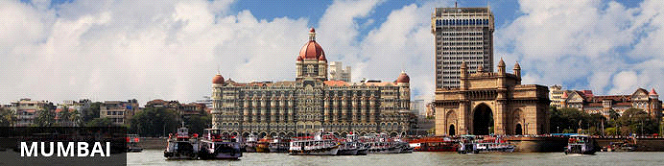
The thriving metropolis of Mumbai is a go-to destination for travellers curious to experience a modern Indian city. Lapped by the Arabian Sea, this urban seaside peninsula is a melting pot of old and new India. Towering office blocks and shiny apartment buildings shoulder crumbling grand dames of architecture. Men play cricket in the leafy central parks, taxis navigate the jam packed streets and families stroll along the seaside promenades of Mumbai, while kilometres away children beg on the peripheries of Asia’s biggest slum. In the wide avenue of Colaba’s high street, western culture overshadows the brightly lit storefronts, where Levi’s, Adidas and McDonalds vie for retail space.
Day 11 Departure
This morning enjoy a sightseeing tour of Mumbai visiting the prince of Wales Museum before transferring to the airport for your onwards Journey.
Transport
| Flight | Departure Airport | Arrival Airport |
|---|---|---|
| Scheduled | Indira Gandhi International Airport [DEL] | Lal Bahadur Shastri Airport [VNS] |
| Scheduled | Lal Bahadur Shastri Airport [VNS] | Khajuraho Airport [HJR] |
| Scheduled | Maharana Pratap Airport [UDR] | Chhatrapati Shivaji International Airport [BOM] |
Transfers
| Pick Up | Drop Off | |
|---|---|---|
| Indira Gandhi International Airport [DEL] | The Park New Delhi | Transfer |
| The Park New Delhi | Indira Gandhi International Airport [DEL] | Transfer |
| Lal Bahadur Shastri Airport [VNS] | Radisson Hotel Varanasi | Transfer |
| Radisson Hotel Varanasi | Lal Bahadur Shastri Airport [VNS] | Transfer |
| Khajuraho Airport [HJR] | Radisson Jass Hotel Khajuraho | Transfer |
| Radisson Jass Hotel Khajuraho | Jhansi Railway Station | Transfer |
| Agra Cantonment Railway Station | Hotel Trident Agra | Transfer |
| Hotel Trident Agra | Trident Hotel Jaipur | Transfer |
| Trident Hotel Jaipur | Trident Hotel Udaipur | Transfer |
| Trident Nariman Point | Chhatrapati Shivaji International Airport [BOM] | Transfer |
Journey Information
| Date | Train | Departure Platform | Time | Arrival Platform | Time | Class | Ref |
|---|---|---|---|---|---|---|---|
| Train | Jhansi Railway Station | Agra Cantonment Railway Station |
Contact Details & Reference Numbers
| Service Provider | Telephone | |
|---|---|---|
| Hotel Trident Agra | +91 562 223 5000 | |
| Radisson Hotel Varanasi | +91 542 250 1515 | |
| Radisson Jass Hotel Khajuraho | +91 76 86 272777 | |
| The Park New Delhi | +91 11 2374 3000 | |
| Trident Hotel Jaipur | +91 141 267 0101 | |
| Trident Hotel Udaipur | +91 294 515 2200 | Udaipur 313 001, India |
| Trident Nariman Point | +91 22 6632 4343 | Nariman Point, Mumbai 400 021, India |
Travel Information
Vast, diverse, deeply spiritual and utterly unforgettable, India is unlike anywhere else on earth – a melting pot of ethnicities and religions, a treasure trove of history and culture, and a curious mixture of chaos and serenity. Stretching across more than three million square kilometres, it encompasses a staggering array of landscapes, vistas and environs, and offers unparalled travel experiences – from the beautiful beaches of Goa, to the compelling craziness of Kolkata, the sacred Ganges river banks of Varanasi, the snow-capped peaks of the Himalayas in Kashmir and the ancient, exquisitely crafted temples dotted across the entire country. Not to mention the vibrant, friendly people, and the incredible cuisine.
Banking and Currency
Currency
The Indian rupee is the official currency of the Republic of India. The modern rupee is subdivided into 100 paise (singular paisa), though as of 2011 only 50-paise coins are legal tender. Banknotes in circulation come in denominations of ₹5, ₹10, ₹20, ₹50, ₹100, ₹500 and ₹2000. Please note that as of November 2016, the older ₹500 note is no longer valid legal tender and only new ₹500 notes will be accepted.
The older Rupee coins are available in denominations of ₹1, ₹2, ₹5, ₹10, ₹20,₹25, ₹50, ₹100, ₹500 and ₹1000; the coins for 20 and above are for commemorative purposes only; the only other rupee coin has a nominal value of 50 paise, since lower denominations have been officially withdrawn.
The import and export of local currency is prohibited. The import of foreign currency is unlimited. However, amounts exceeding US$5,000 or equivalent in cash, or US$10,000 or equivalent in all forms of currency must be declared. The export of foreign currency is allowed up to the amount imported and declared.
Currency can be changed at banks, airports or authorised money changers. Many hotels also have facilities to change money but this is a more expensive option. It is illegal to exchange money through unauthorised money changers. US Dollars and Pounds Sterling are the easiest currencies to exchange.
Banking
Banking hours: Monday-Friday 10h30-15h30; Sat 10h30-13h00.
Strictly speaking, you can neither import nor export Indian currency, but you can get some at the airport straight away to at least get you transport to your accommodation. There are Authorized Foreign Exchange dealers in most big cities, and banks will also change your currency at a fair rate if you have time for the paperwork.
A good way of getting your travellers currency is via an ATM but beware of hidden bank charges, both from the bank providing the ATM and the card-issuing bank – you also do not know what exchange rate you are getting.ATMs are found in most towns and are recommended for cash withdrawals.
Visa, MasterCard and American Express are usually accepted in tourist hotels and many other shops. Debit cards are also widely accepted.
Travellers cheques are widely accepted and may be changed at banks and larger hotels. The most widely accepted currencies include US Dollars and Pounds Sterling. Some banks may refuse to change certain brands of traveller’s cheques whilst others may exchange quite happily.
Travel, Transport and Getting Around
India is big and there are lots of interesting ways to travel around it, most of which could not very well be described as efficient or punctual. Allow considerable buffer time for any journey with a fixed deadline (eg. your flight back), and try to remember that getting there should be half the fun.
India’s large size and uncertain roads make flying a viable option, especially as prices have tumbled in the last few years. Even India’s offshore islands and remote mountain states are served by flights, the main exceptions being Sikkim and Arunachal Pradesh (although crossing over from neighbouring states is fairly easy). Due to the aviation boom over the last few years, airports have not been able to keep up with the air traffic. Most Indian airports continue to function with one runway and a handful of boarding gates. Check in and security queues can be terribly long, especially in Delhi and Mumbai.
Railways were introduced in India in 1853, more than one and half a centuries ago, by the British, and today India boasts of the biggest network of railway lines in the world, and the rail system is very efficient, if not always on schedule. Travelling on Indian Railways gives you the opportunity to discover the Indian landscape and scenic beauty first hand and is generally more economical than flying domestic. It is one of the safest ways of travel in India. With classes ranging from luxurious to regular, it’s the best way to get to know the country and its people. Most train passengers will be curious about you and happy to pass the time with a chat.
In central locations of big cities like airports or stations reliable pre-paid taxis are available and will save you money as well as the bargaining hassle. However beware of touts who would claim themselves to be running pre-paid taxis. Always collect the receipt from the counter first. The receipt has two parts – one part is for your reference and the other part you will need to handover to the taxi driver only after you reach your desired destination. The taxi driver will get his payment by submitting or producing this other part to the pre-paid taxi counter. Normal taxis running by meter are usually more common. In many non Metro Cities (or even in Metros depending on time) taxies or autos may ply without the usual meter.
While you can’t take a cross-country bus-ride across India, buses are the second most popular way of travelling across states and the only cheap way of reaching many places not on the rail network (eg. Dharamsala).
Food, Drink and Cuisine Advice
Water for drinking, brushing teeth or making ice should first be boiled or otherwise sterilised. Milk is often unpasteurised and should be boiled. Avoid dairy products likely to have been made from non-boiled milk. Only eat well-cooked meat and fish. Do not eat salads, vegetables should be cooked and peel your own fruit. Don’t eat street vendor food unless it is piping hot. Tap water is not safe to drink, rely on bottled water which is widely available. However, do check the seal on bottled water.
Indian food is world-renowned for its tantalising flavours, spiciness and enormous variety. Curries are created from the subtle and delicate blending of spices such as cumin, turmeric, cardamom, ginger, coriander, nutmeg and poppy seed although these vary from region to region and every spice has medicinal properties and use.
Vegetable dishes are more common than in Europe, particularly in the fruity, coconutty dishes of southern India, while northern India has an entirely different but equally satisfying cuisine to sample. Breads like paranthas, chapatis, naans and rotis are also part of the main diet in several states like Punjab, Haryana and Uttar Pradesh. Achars (pickles), relishes and chutneys again vary by region and add more resonance to amazing meals.
Sweets or mithai too have regional specialities. They tend to be milk based and some are syrupy and fried. Well-known northern sweets are gulab jamun, jalebi (it’s worth watching how these syprup-based confections are made in the street), kulfi, kheer, halwa and laddu. From the east are rasgulla and rasmalai. The south has several burfi and halwa-type desserts like coconut burfi and badam halwa made from almonds.
While care should be taken in where one eats, exceptional food can be had in the most humble surroundings such as food at ashrams as can be found in 5-star restaurants. Non-vegetarians will find fabulously spiced mutton dishes according to regional specialities including fish dishes typical to coastal areas.
10 to 15% is usual in restaurants that impose no service fee; optional where service fee is added to bill.
Climate and Weather
The weather is mainly hot most of the year with significant variations from region to region. The coolest weather lasts from around the end of November to the beginning of March, with fresh mornings and evenings, and mostly sunny days. The really hot weather, when it is dry, dusty and unpleasant, is between March and June. Monsoon rains occur in most regions in summer anywhere between June and early October.
Clothing and Dress Recommendations
Male or female, one rule covers all visitors to India: don’t leave the house with your arms or legs bare. You’ll naturally get attention as a foreigner, as full-on staring is common and accepted on Indian streets, but you’ll suffer far less negative attention if you remain covered up. For most locations and seasons in India, thin, loose linen or cotton pants and button-down shirts will keep you comfortable in hot, humid weather and help you blend in. While you may see Indian young adults sporting tight jeans and fitted brand-name tops, you’d stand out significantly more in the same outfit. If you visit anywhere in northern India – not just the mountains, Delhi too – during the winter, prepare for seriously cold weather. Bring jeans and heavy shirts and pick up an Indian wool wrap.
What you can get away with at an Indian beach depends entirely on which beach you visit. In the state of Goa, a popular beach and club getaway destination, locals are accustomed to seeing tourists in bikinis on the beach and Indian men often sport Speedos. But skimpy clothes need to stay on the beach. Don’t walk around town or your hotel in nothing but a bikini and sarong. In less Western-frequented beach destinations, such as the beaches around Bombay, Alibag and Chowpatty, or anywhere in the south, hit the beach in light pants and a tunic.
When visiting temples and other religious sites on your own or part of a tour, be on the lookout for signs advising visitors to dress in a specific way to enter the temple. The government of India advises that some religious institutions require visitors to cover their heads or remove their shoes, and covering your legs and arms in respect goes without saying. Certain sites may carry more specific requirements, such as donning a certain colored sash or sarong-like covering. Take your cue from other visitors exiting the site.
Electricity and Plug Standards
For the most part, electrical sockets (outlets) in India are the “Type D” 5 amp BS-546 sockets. This is actually an old British standard. The “Type D” Indian plug and socket is not to be confused with the “Type M” South African plug and socket. In pictures, they look very similar, but the South African type is much larger than the Indian type, and they are physically incompatible. If your appliance’s plug doesn’t match the shape of these sockets, you will need a travel plug adapter in order to plug in.
Electrical sockets (outlets) in India usually supply electricity at between 220 and 240 volts AC. If you’re plugging in an appliance that was built for 220-240 volt electrical input, or an appliance that is compatible with multiple voltages, then an adapter is all you need. If your appliances are not compatible with 220-240 volt electrical output, a voltage converter will be necessary.

